I grew up watching framed images on the walls on my house. I always wondered how can one give face to someone whom we have never met? Its a difficult question and one I have never found yet. But what I came to know in my search is about the the painter who is famed as the one who made the gods human, Ravi Varma.
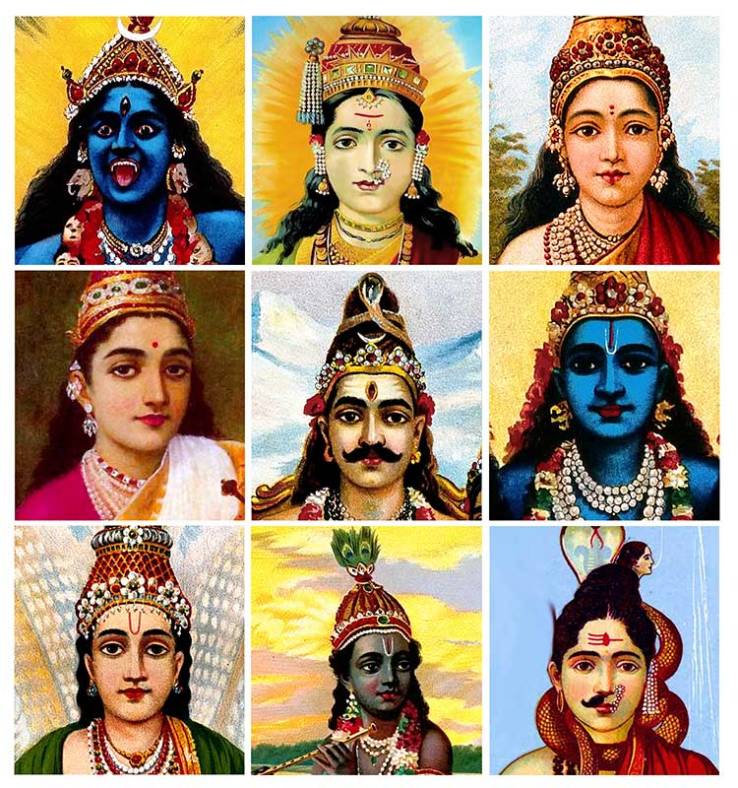
Ravi Varma-God paintings
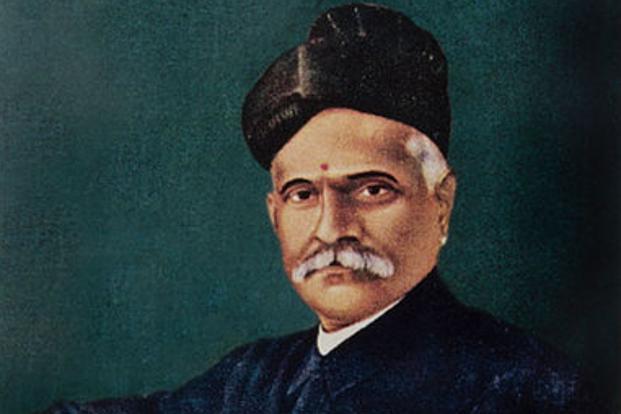
Born into an aristocratic family, in Travancore, in 29 April 1848 Ravi Varma is considered among the greatest painters in the history of Indian art for a number of aesthetic and broader social reasons. His paintings revolves mainly around the Puranas (ancient mythological stories) and the great Indian epics – Mahabharata and Ramayana. His works are held to be among the best examples of the fusion of European techniques with a purely Indian sensibility. While continuing the tradition and aesthetics of Indian art, his paintings employed the latest European academic art techniques of the day. He received international recognition in 1873, when he won the first prize for his paintings at the Vienna Art Exhibition.
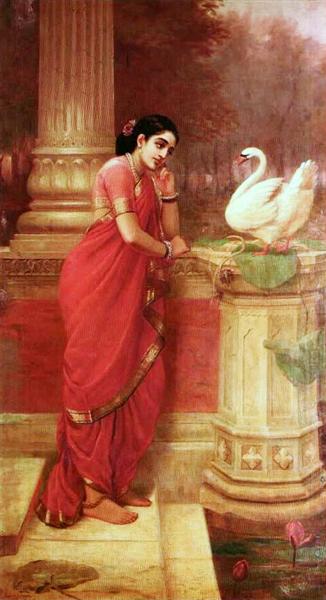
Hamsa-Damayanti-1899 
Nair-Lady adorning her hair 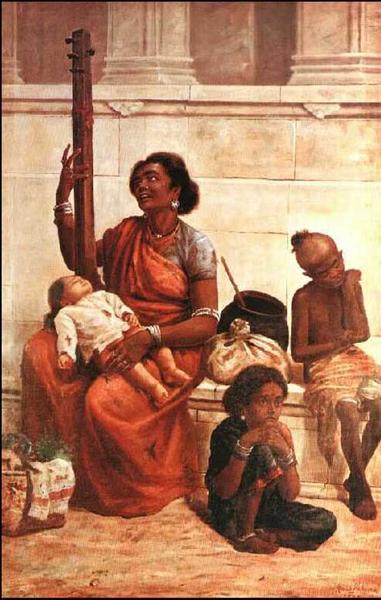
Gypsies-1893 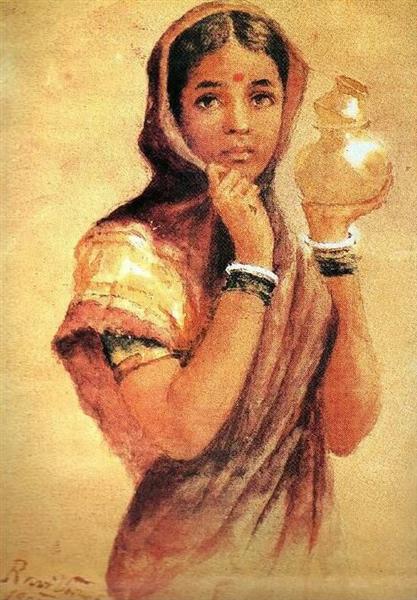
The Milkmaid 1904 
Santhanu and Matsyagandhi-1890
It is around his time, lithographic printing was gaining popularity in many European countries and in the United States. Intrigued by the idea of having an own lithographic press Ravi Varma first started Ravi Varma Fine Art Lithographic Press and the production started a year later. Among the many promising artists who worked there included M.V Dhurandhar and the father of Indian Cinema Dadasaheb Phalke. The press was later shifted to a place near Lonavala, Maharashtra. The press came up with tons of oleographs (print textured to resemble an oil painting), depicting Hindu gods and goddesses. “Saraswati” and “Lakshmi” became the two most popular prints ever produced in India.
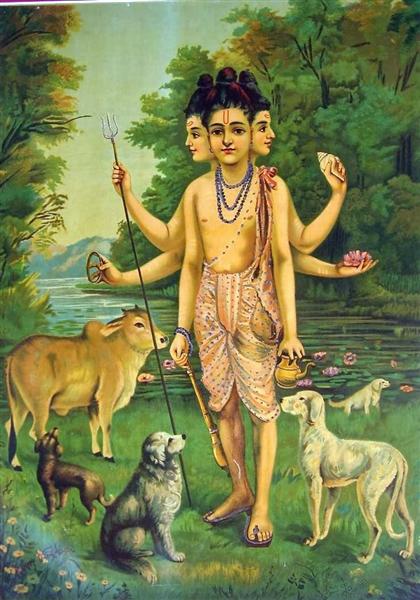
Dattatreya-1910 
Ganga Avataran or
Descent of Ganga-1910
Lakshmi the goddess of wealth-1906 
Goddess Saraswati-1896 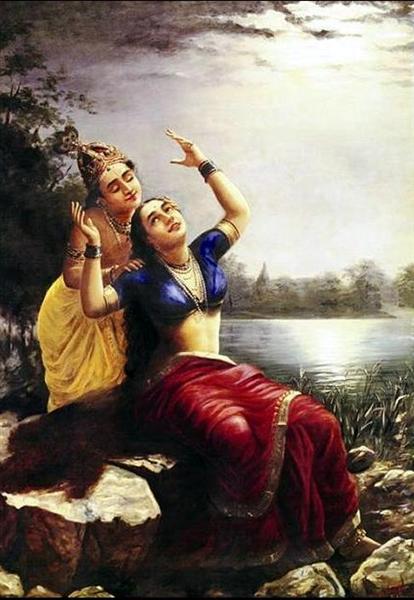
Radha and Madhav-1890 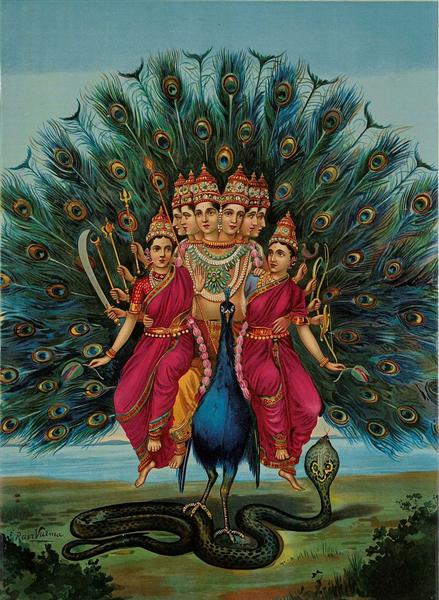
Sri Shanmukaha-Subramania Swami 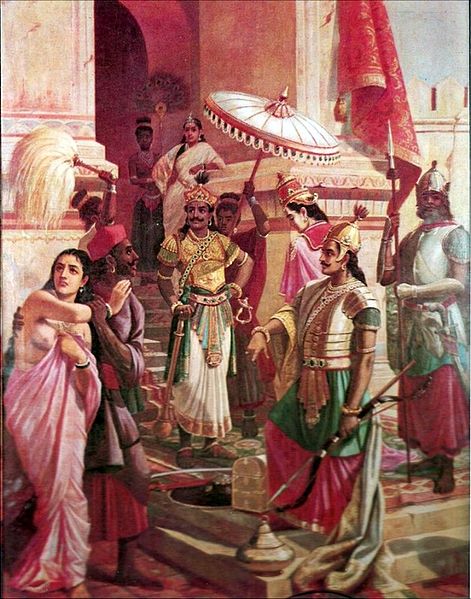
Victory of Meghanada-1905 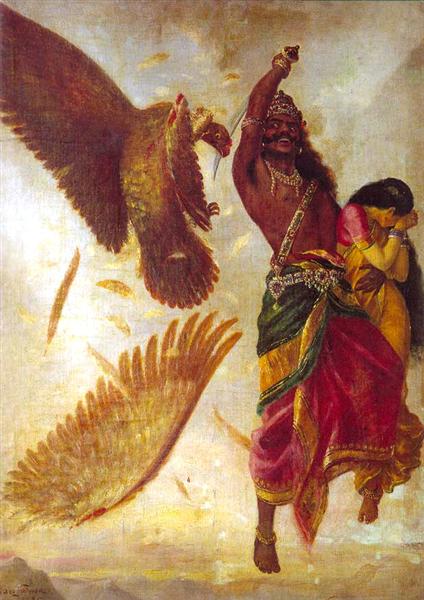
Jatayu Vadham-1895
What actually made him uncommon was making affordable lithographs of his paintings available to the public, which greatly enhanced his reach and influence as a painter and public figure. In particular, his depictions of Hindu deities and episodes from the epics and Puranas have received profound acceptance from the public and are found, often as objects of worship, across the length and breadth of India. His works were accessible to the common man because of his venture of printing and distribution of oleographs. The men and women who were not allowed inside the temples got an opportunity to pray in front of Gods and Goddesses’, even if it was images. And alternatively, this made him a household name across India. A lot of Ravi Varma’s paintings were used by many companies for advertising, solely to attract more and more people.
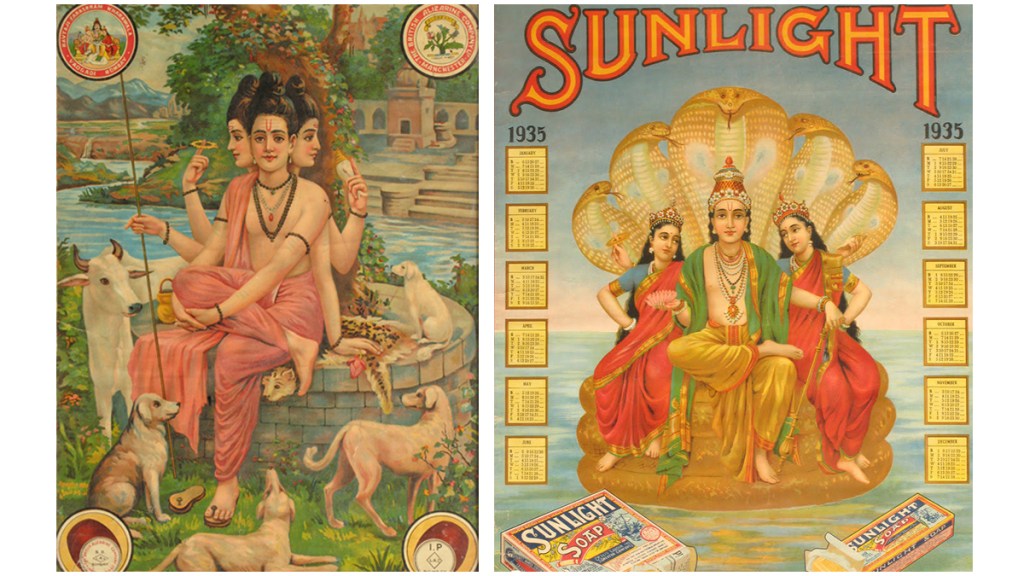
It is not wrong to say that he played a major role in taking the Indian art all over the world with his impeccable technique. While the Europeans and other art lovers admired his technique, the laymen of India enjoyed his work for its simplicity. More often than not, his paintings highlighted the beauty of South Indian women.
In 1904 Viceroy Lord Curzon honored him with the Kaisar-i-Hind Gold Medal for his service in the furtherance of public interest. Recognizing Ravi Varma’s prodigious contribution to Indian art, the Government of Kerala instituted an award in his name, the ‘Raja Ravi Varma Puraskaram’. The award is given to individuals who show considerable promise in the field of art and culture.
Sources: culturalindia.net and artnewsnviews.com. Photographs: wikiart.org
 Celestle
Leave a comment