By
Siva Wright
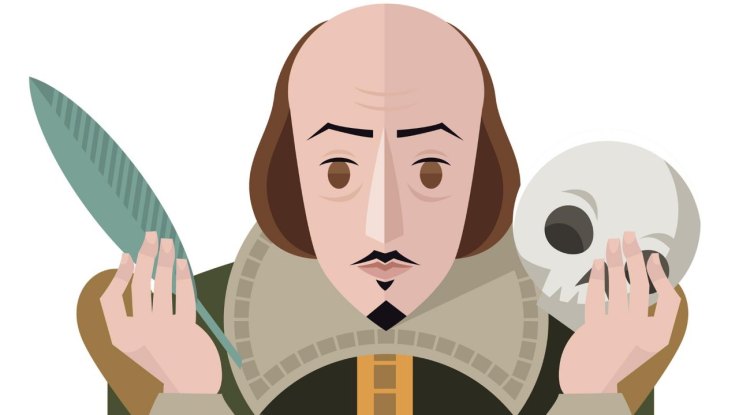
As you walk past the stores in a sidewalk, grab someone by their hand and ask them to give you a name of an English writer. Almost anyone would say ‘Shakespeare’. If you are ready to concede this to his popularity, ask critics/academics about Shakespeare. They too will sing his praises like he’s going to give them a raise. But why is this? Why is Shakespeare so famous? How did he become so towering a figure that all other writers, dramatists, poets and novelists alike has become darkened in his shadows? Does he truly possess the extraordinary genius that is ascribed to him? Or have other external factors have contributed to the ‘myth’ of Shakespearean genius?
One of the first things that come to mind is people’s conception of Shakespeare as some kind of unlearned genius. Sure he didn’t go to a university like the University Wits but he did go to the local Grammar School in Stratford-upon-Avon. In those days, Grammar Schools taught among other things Latin. Latin compositions and works of authors like Seneca, Cicero, Virgil, Ovid and Horace would’ve been taught to him. One can see his familiarity with Latin stories and works in his allusions to them in his plays. So to call Shakespeare an ‘Unlearned genius’ – like he possessed some kind of innate natural genius is baseless.
Another common misconception is that Shakespeare ‘wrote’ his plays. No, I am not talking about the controversy that it was someone else – there are many contenders for this including Queen Elizabeth I – but regarding their originality. While Shakespeare definitely wrote his own plays, he almost never wrote it based on his own ideas/plot. Almost every (good) play of his was written based on borrowed plots – All of his historical plays are, as the name implies, historical and therefore has no originality in terms of story, Hamlet was borrowed (I would prefer stolen but anyway) from an old Scandinavian tale, Romeo and Juliet was borrowed from a contemporary Italian writer. While he did make the stories/plots his own and imbued them with poetic dialogues, plot is the canvas where any writer works and he stole his from others. His plays, at best, can be called adaptations and sure they are indeed great adaptations. But they can never be ‘his’. And, to my knowledge, he never credited his source thereby he becomes a plagiarist.
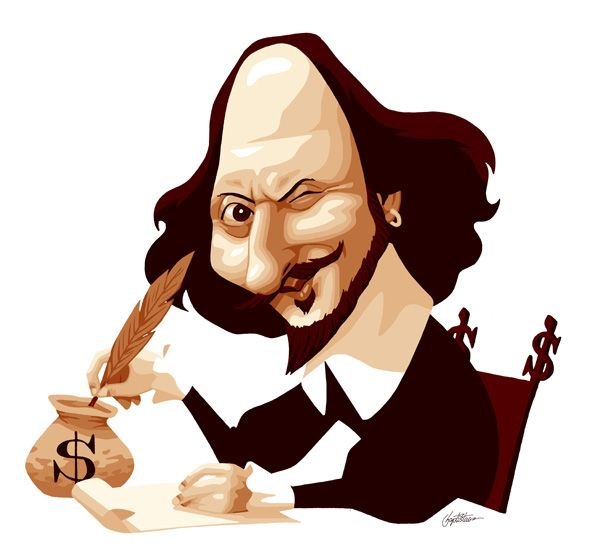
But, even after clearing the misconception that Shakespeare is some infant prodigy, the question “How did he become so damn famous?” remains. There is more than one factor to consider.
The first one would be his language. Shakespeare, in his plays, used the language as it was used in the King James Version of the Bible. Yes, while writing the dialogues of commoners he abandoned this but for the most part it was similar to the word of the god. Everyone in England (almost) read Bible everyday (almost). So, seeing a play and hearing a language they are so accustomed with, would have definitely played a role. This would’ve also helped his plays survive, while the language of his contemporaries became obsolete.
There were also his political convictions. Actually, there wasn’t any. Whoever was the ruler, his politics would shift to meet theirs. He wrote plays glorifying Tudors when a Tudor was at throne. When King James I was threatened by the ‘Gunpowder Plot’, Shakespeare wrote Macbeth as a warning to those who think they could kill a king and get away with it. As Jews were an oppressed class, a tragedy if you see it from Shylock’s point of view, was termed as a ‘comedy’ and Shylock was made fun of in ‘The Merchant of Venice’, just to please the audience. Shakespeare, as a writer, had absolutely no social concern. All he cared for is his own well-being and he would and he did do anything to achieve that end. While poets like Milton went blind with defending his political ideology and prosecuted for his political integrity, Shakespeare shamelessly compromised his political integrity (if there was any in the first place) in order to be in the good graces of his patrons. This lack of political integrity and social concern not only ensured his financial well-being but also ensured that his plays would always get staged (for without patrons it is impossible to get your play to stage). His conservative themes too helped the survival of his plays. If Shakespeare was concerned with the social well-being of the people of his time and dealt with the social issues of his period, as any responsible author would do, he would’ve become another one of the many writers we now read in history of literature if not completely forgotten.
It is these and other minor factors that contributed to the survival of his plays and thereby his fame rather than his ‘genius’ which so many other writers possessed before and after him. So, next time when you approach Shakespeare, remember, he is just another writer- A socially irresponsible, spineless one at that.
 Celestle
Leave a comment