1. Jeff Wall based this elaborately staged photograph on the prologue of Ralph Ellison’s celebrated 1952 novel, Invisible Man.

The novel’s protagonist, an unnamed African American man, relates that he lives secretly “in my hole in the basement,” where he has “wired the entire ceiling, every inch of it” with 1,369 lights powered by illegally siphoned off electricity. His intention was not to make a literal illustration of the text, but to give form to the picture it inspired in his mind, which he calls “accidents of reading.”
2. Ophelia is a painting by British artist Sir John Everett Millais.
It depicts Ophelia, a character from Hamlet, William Shakespeare’s play, singing before she drowns in a river in Denmark.
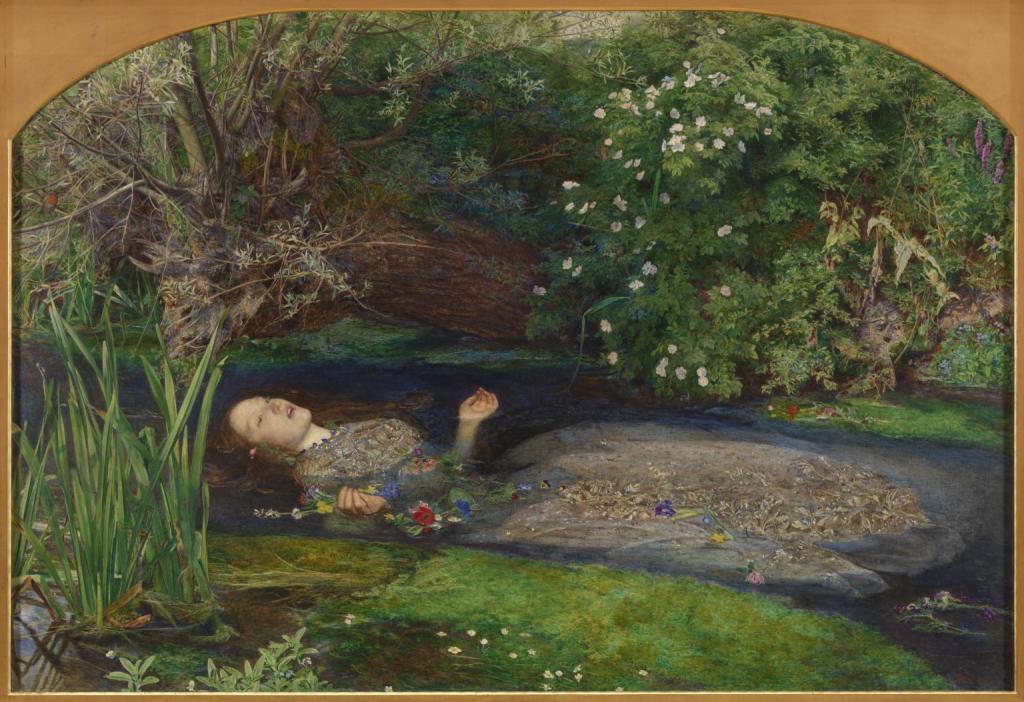
The painting is one of the most popular Pre-Raphaelite works in the Tate collection. Millais’s image of the tragic death of Ophelia, as she falls into the stream and drowns, is one of the best-known illustrations from Shakespeare’s play Hamlet.
 “Fell in the weeping Brooke, her clothes spread wide,
And Mermaid-like, a while they bore her up,
Which time she chanted snatches of old tunes,
[…]
Till that her garments, heavy with her drink,
Pul’d the poor wretch from her melodious lay,
To muddy death.
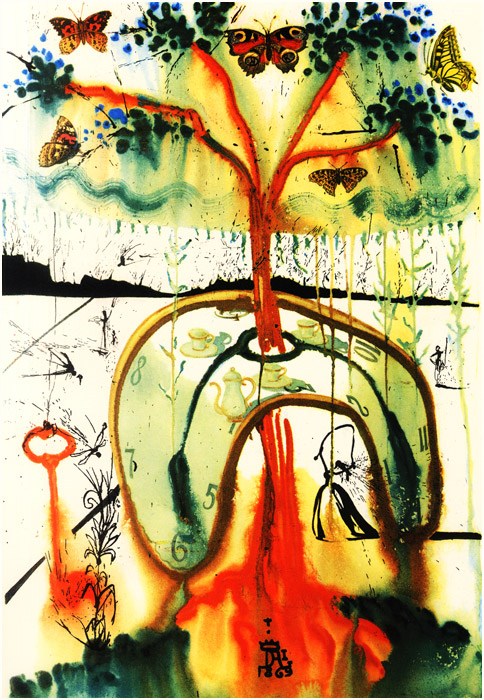
3. Salvador Dalí Illustrates Alice in Wonderland
The volume went on to become one of the most sought-after Dalí suites of all time. It contains 12 heliogravures — one for each chapter of the book and an original signed etching in four colors as the frontispiece — digitized at the William Bennett Gallery.
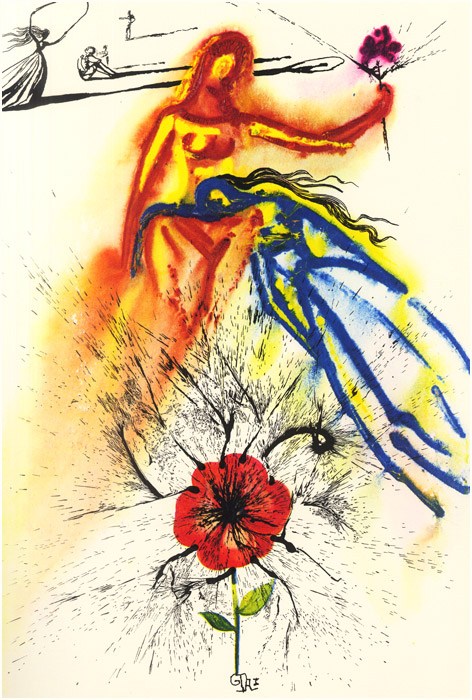
Alice’s Evidence
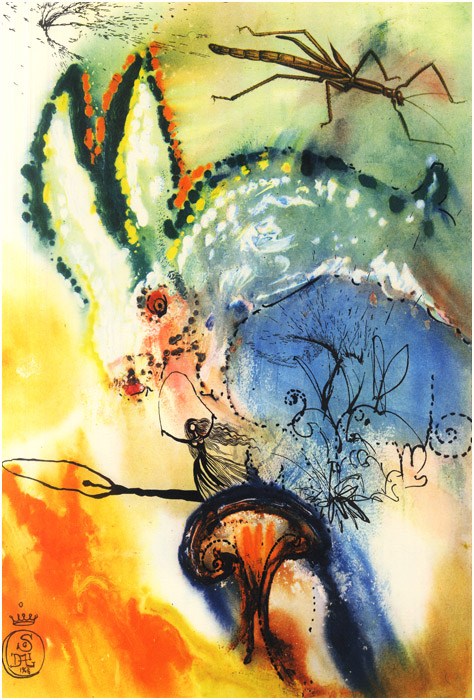
Down the Rabbit Hole
4. John William Waterhouse, The Lady of Shalott (1888)

This painting illustrates Alfred Tennyson’s poem The Lady of Shalott. Draped over the boat is the fabric the lady wove in a tower near Camelot. But she brought a curse on herself by looking directly at Sir Lancelot. With her right hand she lets go of the chain mooring the boat. Her mouth is slightly open, as she sings ‘her last song’. She stares at a crucifix lying in front of her. Beside it are three candles, often used to symbolise life. Two have blown out. This suggests her life will end soon, as she floats down the river.
5. The Lament for Icarus, Herbert James Draper 1898
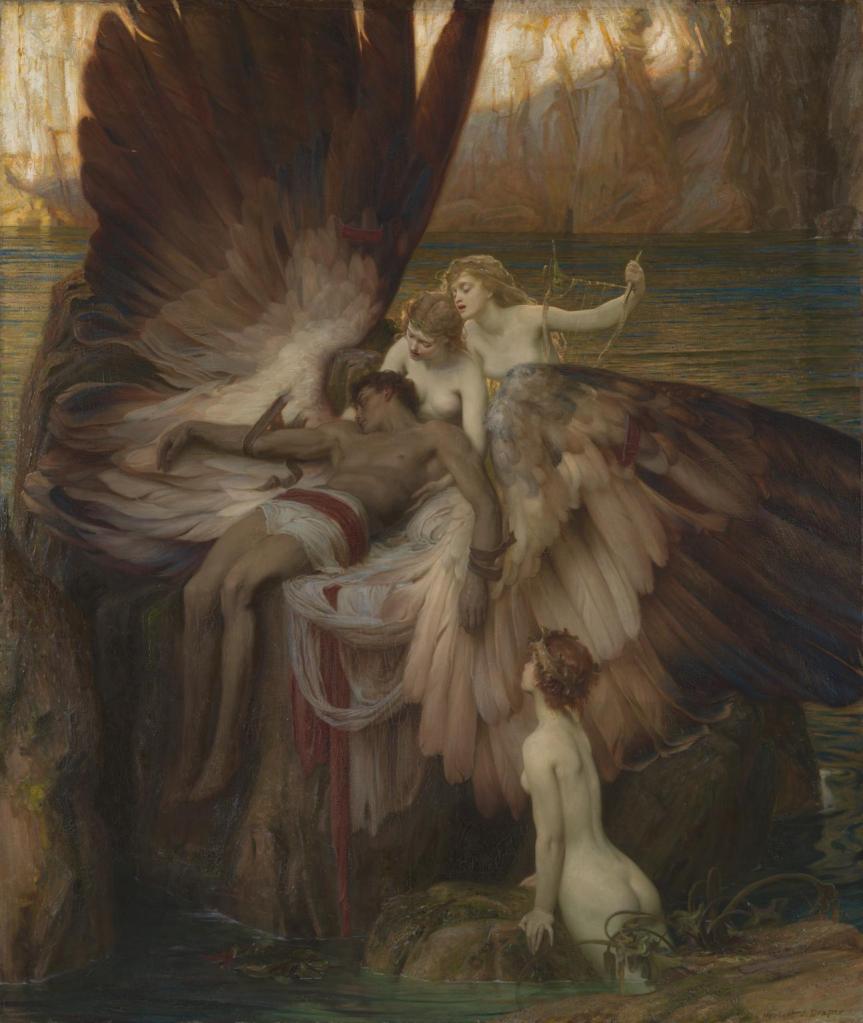
Icarus, surrounded by lamenting nymphs.
Icarus’s father, the inventor Daedalus, made wings that allowed them to fly away from their island prison. The exhilarated Icarus forgot warnings and soared too close to the sun, melting the wax that secured the feathers, and he fell to his death.
6. Pablo Picasso, Don Quixote (1955)
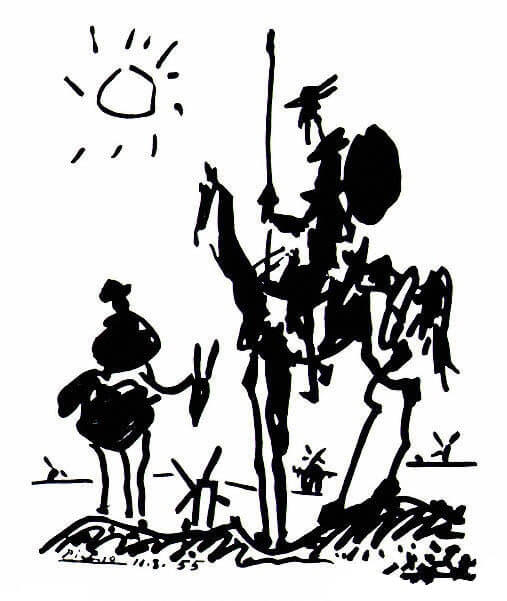
This depiction of Cervantes’s effervescent Don Quixote de la Mancha and companion Sancho Panza is stylistically very different to Picasso’s earlier works. The bold lines, almost scribbles, that compose the figures are stark against a plain, white background. The figures are almost laconic and deformed, and are dramatic.
Google arts and culture
Brainpickings.org
Moma.org
News.artnet.com
 Celestle
Leave a comment